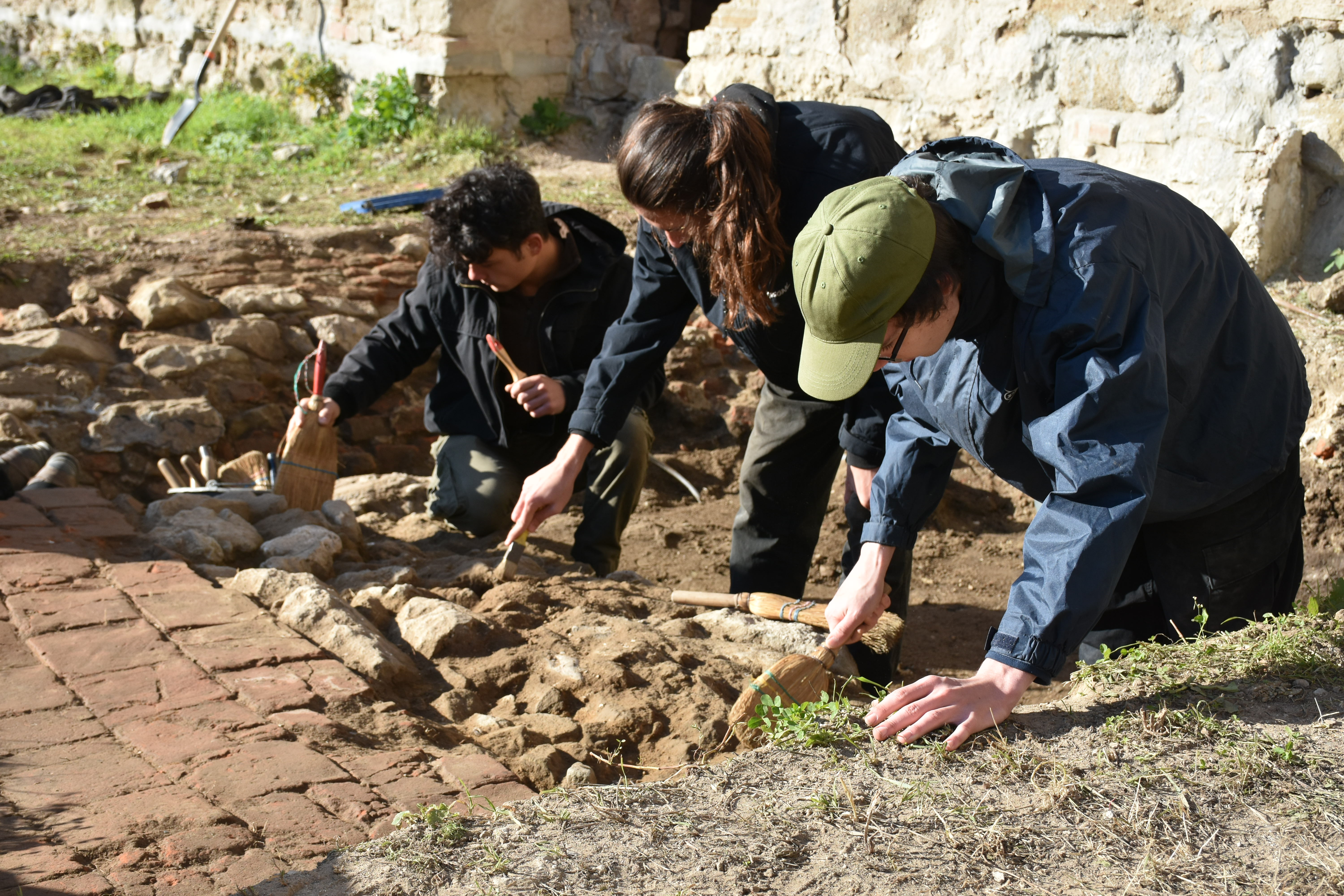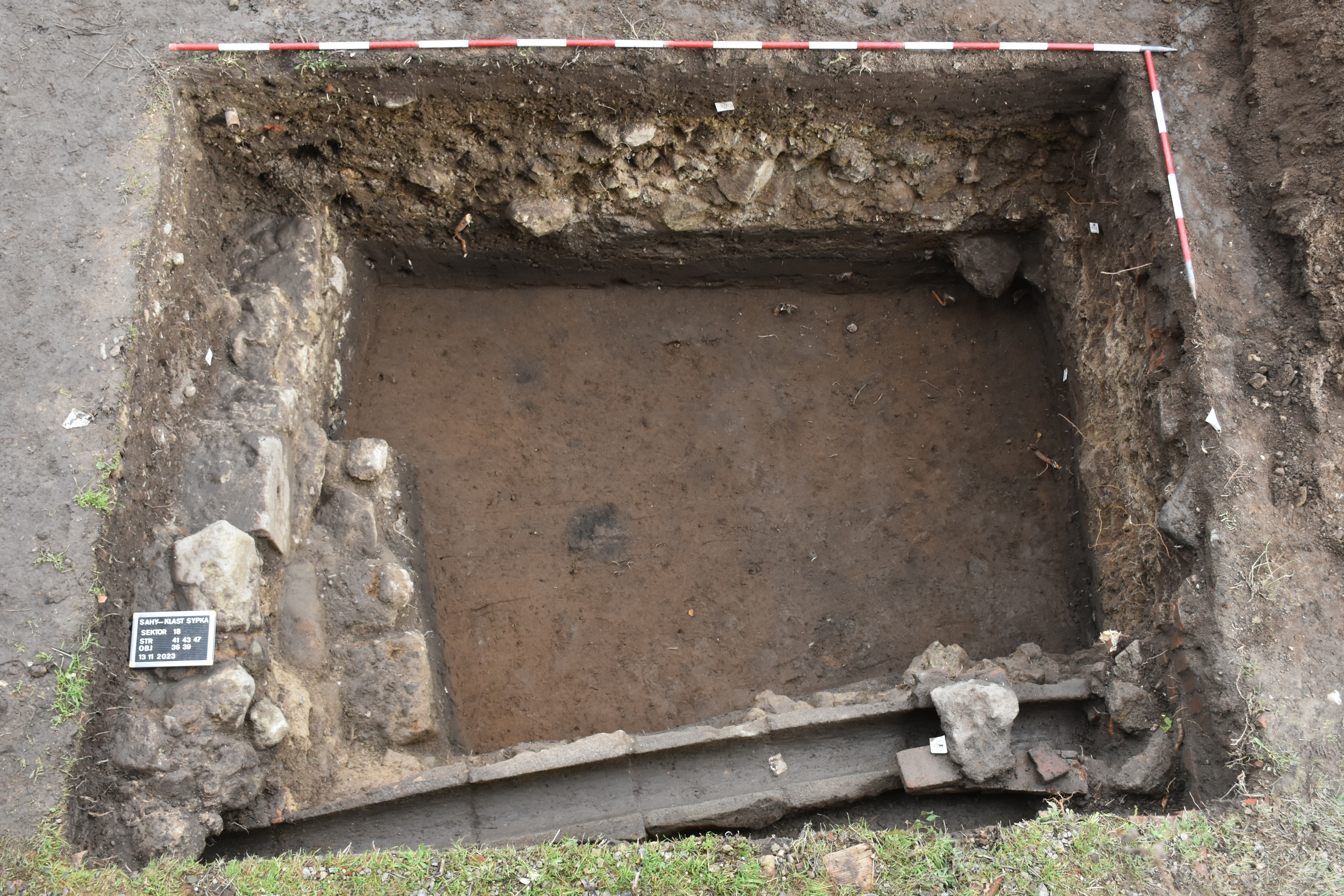
In the autumn of 2023, Pázmány Péter Catholic University conducted archaeological research at the medieval Premonstratensian monastery in Ipolyság (Šahy), in cooperation with the Barsi Museum in Levice, over the course of seven working weeks.
The excavation was carried out in several phases. Work had already begun in 2021 with the participation of Slovak and Hungarian specialists and with the professional support of the Barsi Museum. Although the earlier investigations covered a large area, they did not reach the subsoil level everywhere. The goal of the 2023 campaign was to continue and complete the work started in 2021.
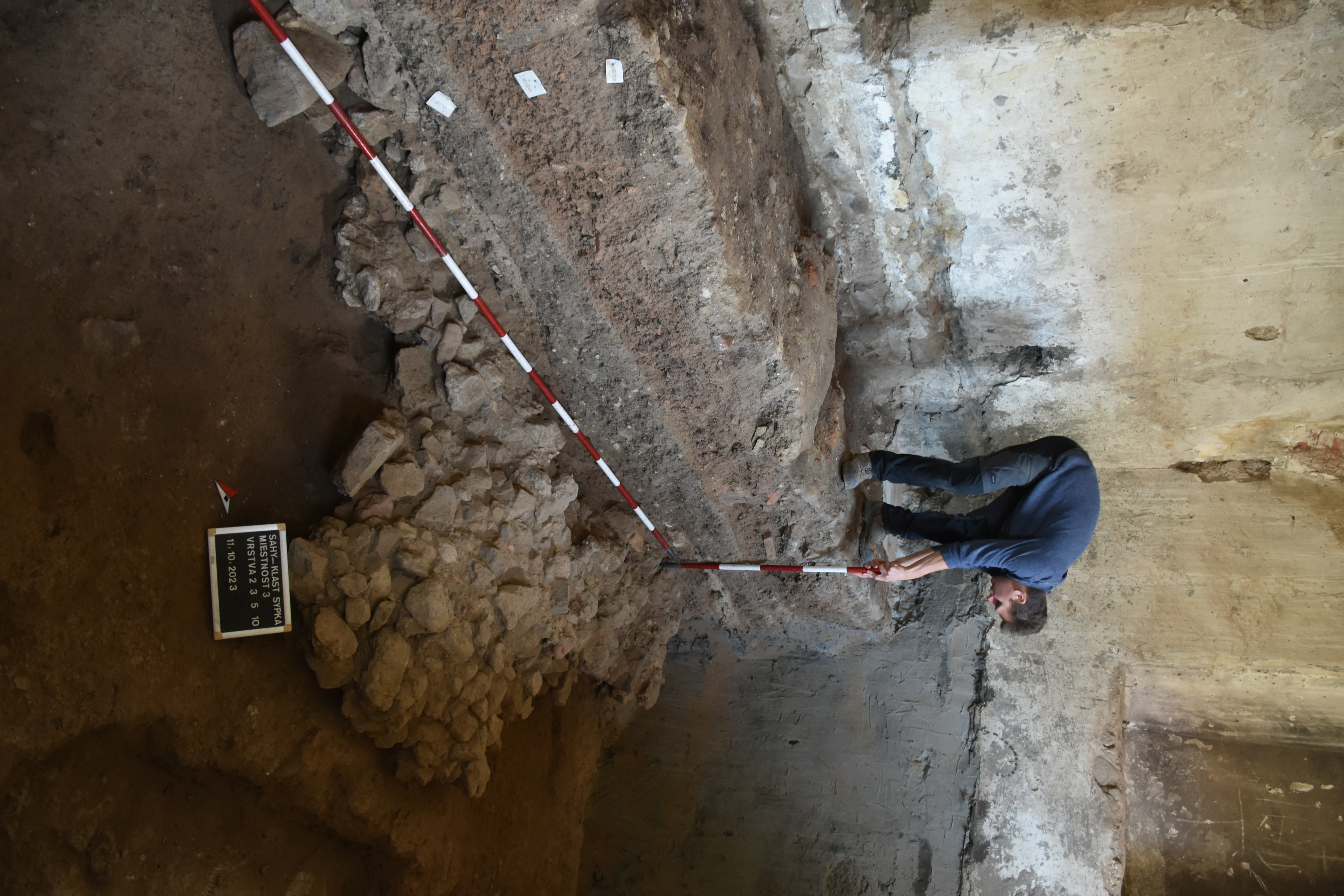
The medieval monastery building itself has not survived. After the expulsion of the Ottomans, a Jesuit residence was constructed on the site of the monastery, reusing its stones and incorporating the cloister corridors. This building was heavily rebuilt during the Baroque period and later used as a granary in the 20th century. Excavations took place in the three southern rooms of the granary, as well as over a relatively large area east of the building, south of the present parish church.
During the excavation, we uncovered the main walls of the late medieval monastery and fragments of brick flooring of the same period, composed of uniformly sized bricks. The brick floors were framed by timber beams, traces of which were found in a charred state at several locations. These beams had not burned naturally but were the result of a major fire event.
The traces of burning are associated with a thick destruction layer covering the floor, which contained a rich assemblage of late medieval finds, including book fittings and weapon-related objects. Beneath the brick floors, earlier medieval fill layers were observed, as well as evidence of a late medieval reconstruction phase of the monastery.
A clearly identifiable leveling layer from the Angevin period appeared in several trenches, containing the demolition debris of earlier Árpádian-period monastery walls. Within this debris layer—and in the Árpádian-period fill below—it was also possible to identify the foundations of Árpádian walls. Based on their layout, these suggest a rectangular building oriented west–east. The later medieval walls were constructed directly on top of these earlier foundations.
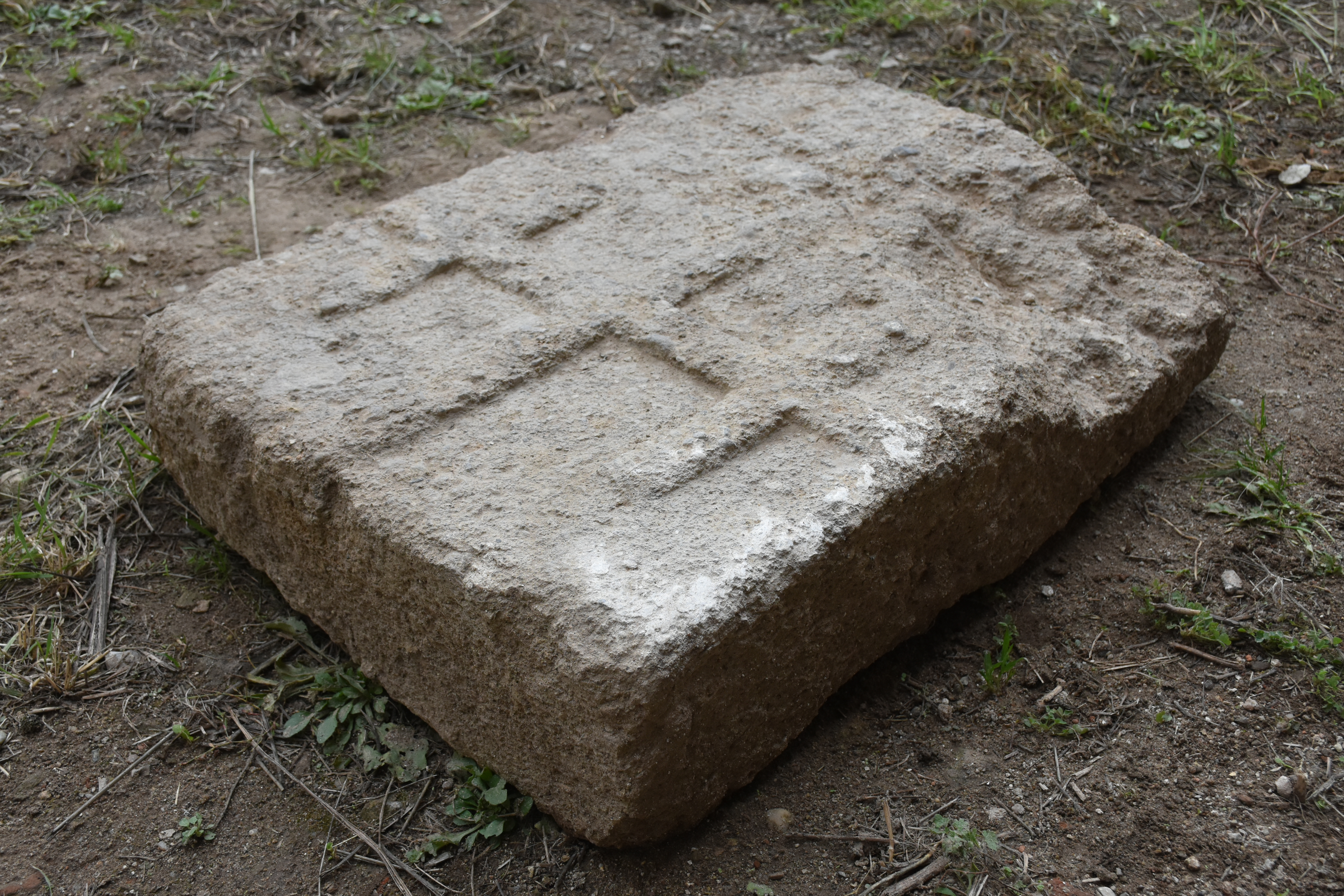
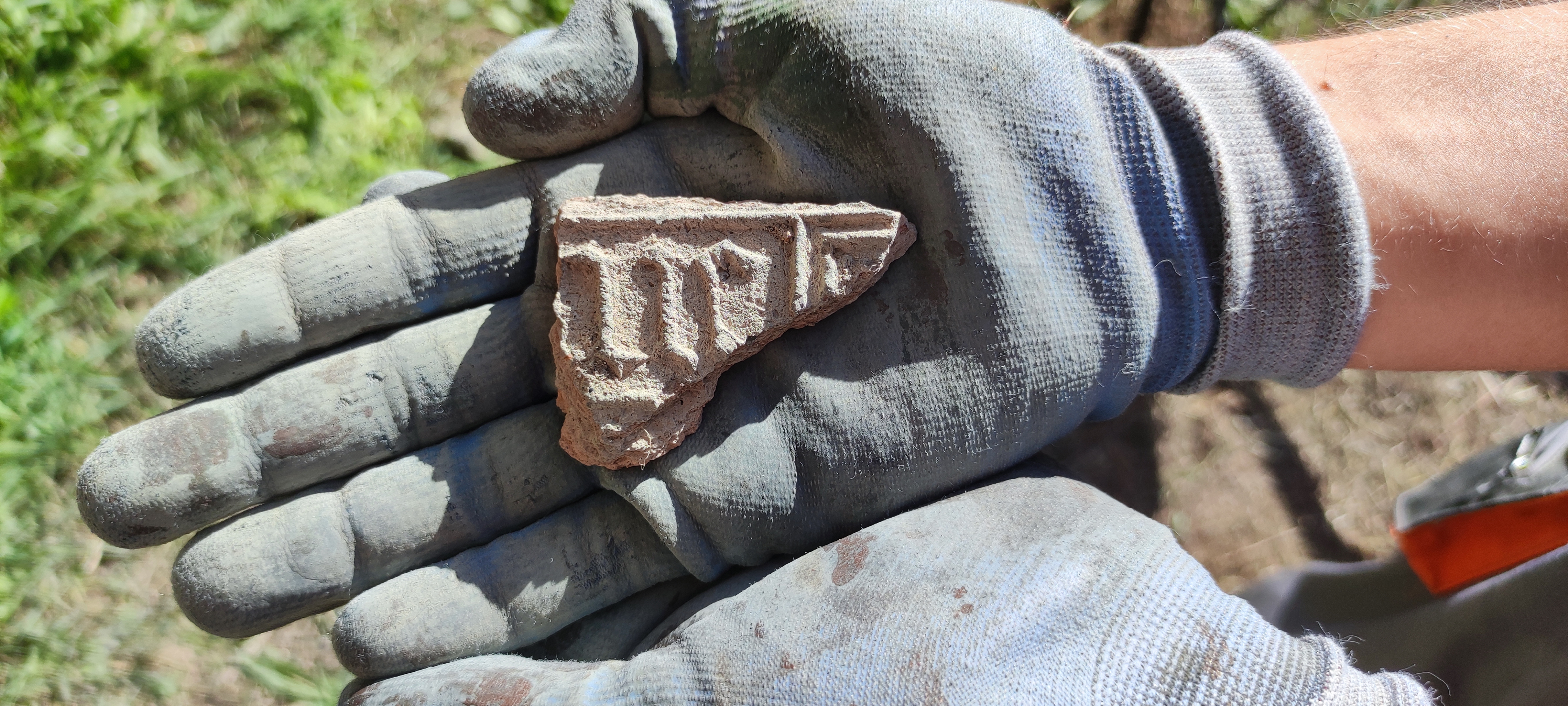
The burials uncovered during the excavation, based on their grave goods, date to the late medieval period and were confined to a clearly defined area within the monastery. A carved tombstone in a secondary position was also found here. The wealth of the medieval monastery is indicated by finds such as Gothic stove tiles with inscriptions and fragments of glass inlays.
The stratigraphic sequence was traced down to the subsoil. Evidence of settlement prior to the foundation of the monastery was also identified: a coin of Béla III of Hungary and early Árpádian pottery fragments attest to occupation already in the first half of the Árpádian Age.
An industrial kiln, also likely from the Árpádian period, was identified through the discovery of vitrified bricks, found partly within Árpádian wall foundations and partly in the fill layers of one of the granary rooms.
The excavation work was supported by volunteers from the Community Archaeology Association, who assisted both with manual excavation and metal-detector surveys.